The Balmis's expedition

Members of the expedition

Physicians and caretakers

Francisco Xavier [de] Balmis

Director of the Expedition.

Born in a family of surgeons, he worked in the Military Hospital in Alicante and as a military doctor in Mexico, where he lived and researched for a while. He graduated as a surgeon in the Real Protomedicato of Valencia. According to Ramírez Martín (1998), he can be described as an enlightened scientist for the approach he used for the planification of the Expedition.

José Salvany Lleopart

Sub director of the Expedition.

He was a surgeon of the Real Sitio de Aranjuez and a graduated from the Real College of Barcelona. His participation on the Expedition was proposed by the surgeons Antonio de Gimbernat Arbós, Leonardo Galli and Ignacio Lacaba.

Manuel Julián Grajales

Hired as helper (ayudante).

He graduated from the Real College of Saint Carlos. His participation on the Expedition was proposed by the surgeons Antonio de Gimbernat Arbós, Leonardo Galli and Ignacio Lacaba. He accompanied Salvany when the Expedition bifurcated in Caracas.

Rafael Lozano Pérez

Hired as a practitioner (practicante).

According to the documentation of the Expedition left by Balmis the General Archive of the Indies has, he was a “proved surgeon that had already been practicing the new inoculation”. His participation in the Expedition was proposed by Balmis. When the Expedition bifurcated in Caracas, he was sent along with the group of Salvany.

Antonio Gutierrez Robredo

Hired as helper (ayudante).

He served as doctor (médico de número) in the army of Extremadura; he also graduated from the Real College of Saint Carlos. His participation in the Expedition was proposed by Francisco Xavier [de] Balmis.

Antonio Pastor

Hired as nurse.

Nephew of Balmis; in a document dated 24 August 1803, Antonio Pastor was proposed by him to replace Angel Crespo: «En lugar de Don Angel Crespo, que se ha imposibilitado, propone para enfermero a Don Antonio Pastor, persona muy a propósito aún para practicante», AGI, Indiferente 1558A, f. 34-35.

Francisco Pastor [y] Balmis

Hired as a practitioner (practicante)

Nephew of Balmis, he worked as his helper before the Expedition was conceived. His participation in the Expedition was proposed by his uncle, as he believed his expertise would be beneficial for the task upfront.

Basilio Bolaños

Hired as nurse

His participation in the Expedition was proposed by Balmis. He was sent with Salvany when the Expedition bifurcated in Caracas.

Angel Crespo

Hired as nurse.

Although does not make the list of those who departed from La Coruña, in the accounts of the journey of the expedition by New Spain, Angel Crespo is said to have been sent to Durango and San Luis de Potosí.

Pedro Ortega

Hired as nurse.

His participation in the Expedition was proposed by Balmis. He died while working in the Expedition, in Manila (Isusi, 2021, pp. 99).

Isabel Zendal Gómez

Hired as the children's caretaker.

She was posthumously recognized as the first female nurse in an international mission and was the only woman formally acknowledge to be part of the Expedition since the beginning. Before her participation in the journey to America, she was the Director of the Casa de los Expósitos of Coruña, from where most of the kids of the Expedition were taken from.

Children who carried the smallpox virus

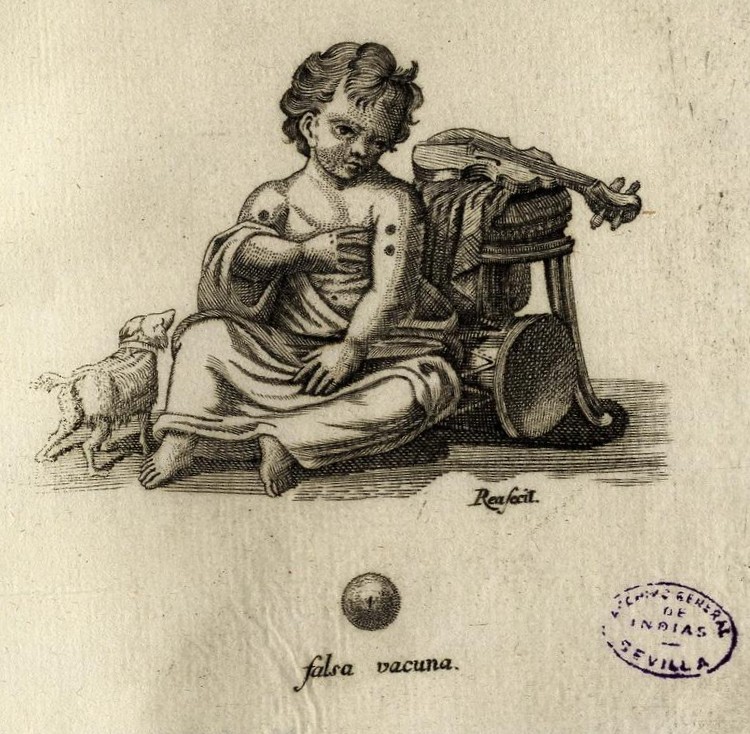
Much can be said about the route of the Expedition, the members, the countless adversities they faced, and where to start researching this topic. But what about the children who carried the vaccine? It is hard to start. This website does not attempt such a task, for the lack of information is evident in the sources here presented. Nonetheless, I did not want to leave them unmentioned, as their contribution is usually overlooked. The quotes presented below were selected to pay homage to the role they were obliged to fulfill and, hopefully, to raise interest in further studies centered on them.

¿Por qué se utilizan exclusivamente niños en la Real Expedición de la Vacuna? Para trasmitir la vacuna da lo mismo que sea una vacuna injertada en niños o en adultos. Pero se usan niños porque se busca la garantía. Un adulto puede haberse inmunizado frente al virus virolento y no manifestar externamente la enfermedad. Como las epidemias de viruela se producían periódicamente, la edad del niño garantizaba que nunca había pasado las viruelas y al no estar inmunizado iba a sufrir los efectos de la vacunación. - Ramírez Martín, 2003, p. 84, 85.

Las condiciones que se requerían en los niños que transportasen la vacuna están determinadas en la circular para su propagación. En esta circular tipo, que es mandada a todos los territorios que van a recibir la vacuna, se establece que la expedición necesita un número de niños «prefiriendo los Expósitos donde los hayan y precediendo el consentimiento de los padres, si los tuvieran conocidos». - Ramírez Martín, 2003, p. 85.

No siempre se cumplió la condición de la edad y se recurrió a niños más pequeños o más mayores cuando hubo necesidad y tampoco el número de niños teóricamente necesarios, pues la cifra fue más reducida en general. En el trayecto más largo, desde Acapulco a Filipinas, también fué más elevado el número de niños, alcanzando la cifra de veintiséis. Finalmente, no todos eran niños expósitos sino que, a lo largo del viaje, muchos de ellos eran cedidos por sus familias, a las que se indemnizaba por dicha cesión. - Balaguer & Ballester p. 63.

Ésta, en definitiva, es la historia de expósitos como los que partieron con Balmis y Salvany. ¿Qué sucedió finalmente con los primeros veintidós niños cuando fueron devueltos a España? No lo sabemos, pero no es aventurado afirmar que, tras haber cumplido la función para la que habían sido elegidos, la sociedad se olvidó de ellos. - Balaguer & Ballester, 2003, p. 64.